How long does ammo last, and how should you store it?
Kept cool and dry, modern factory ammunition lasts for decades. There's no expiry date printed on the box. What shortens its life is how it's stored.
The short answer
Manufacturers often mention about ten years, which is a cautious figure rather than a hard limit. Plenty of shooters fire ammunition that's far older without trouble. Moisture, heat and big swings in temperature are what break it down over time. They can corrode the case, weaken the primer or affect the powder, and that can mean misfires, weak loads or a round that won't chamber.
Some shooters find rimfire, like .22LR, less forgiving of poor storage than centerfire. Steel cases can rust where brass would only tarnish.
Where to keep it
- Somewhere cool and dry inside the house. A closet or a basement with a dehumidifier is far better than a garage, attic, shed or car trunk, where summer heat and winter cold take turns.
- In a sealed container. Leave the rounds in their boxes and put the boxes in an ammo can with a good gasket. Add a desiccant pack and replace or recharge it every so often.
- Away from chemicals. Keep it apart from solvents, cleaning products and oils, which can seep into primers.
- Locked up and separate from your guns. Store it where children and visitors can't get to it. More in our firearm safety basics.
Label each can with what's inside and when you bought it, so you can find things without opening every lid.
Shoot the oldest first
Rotating your stock solves most shelf life worries. Use your oldest practice ammunition at the range and keep newer boxes for later. If you keep defensive ammunition loaded, swap it for fresh rounds from time to time and shoot the old ones in practice.
When not to fire a round
Look over old ammunition before you use it. Set aside any round with:
- green or white crust, or rust on a steel case
- dents, cracks or a bulge in the case
- a bullet that's loose, pushed in or sitting crooked
- a primer that looks damaged or sits too high
Rounds that got wet but look fine after drying are best used up in practice rather than kept for anything important. When in doubt, don't fire it. If a round fails to go off, keep the muzzle pointed in a safe direction and wait at least 30 seconds before opening the action.
Getting rid of bad ammo
Don't throw ammunition in the trash or burn it. Ask your local range, gun shop or police department how to dispose of it in your area.
Knowing what you have
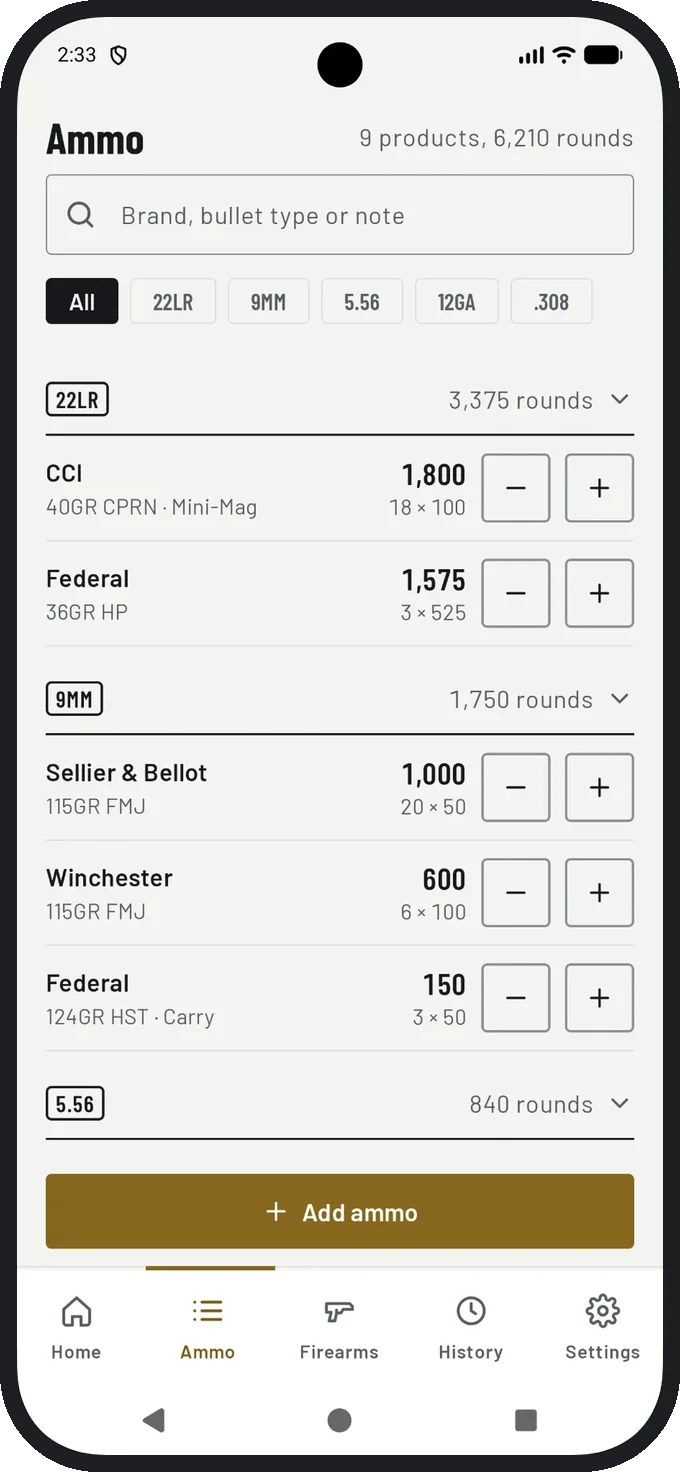
Rotation only works if you know what's oldest. In Arms & Ammo Log, every box you add or take out goes into a dated history, so you can see when each lot came in. Range trips take the rounds you fired off your count, and a low-stock limit for each caliber tells you when to buy more. See the ammo inventory guide for how it works.
This page is general information. For a specific load, follow the manufacturer's guidance.
Questions
Does ammo expire?
There's no expiry date. Factory ammunition stored cool and dry usually works for decades. Heat and moisture are what shorten its life.
Can I store ammo in the garage?
It's better not to. Most garages get hot in summer, cold in winter and damp, and those swings are what age ammunition. A closet inside the house, in a sealed can with desiccant, is a better spot.
More guides for gun owners, or see everything the app does.